Flagship project — engineering log

CropSCOUT:
from class bench
to field robot.

The working MVP, the custom PCB stack behind it, the platforms we studied, and the exact plan to get CropSCOUT into Uzbek greenhouses and vegetable farms — precision spraying and crop monitoring first.

MVP — tested & validated 7-PCB distributed system Presented at ASU Innovation Showcase
01 — The MVP

Working prototype, demoed in public

A real, driving, sensing rover — steerable 4-wheel base, controllable front arm, soil & air sensing, and a wireless controller talking to it over MQTT. Built and presented at the ASU Fulton Innovation Showcase in front of 500+ people.
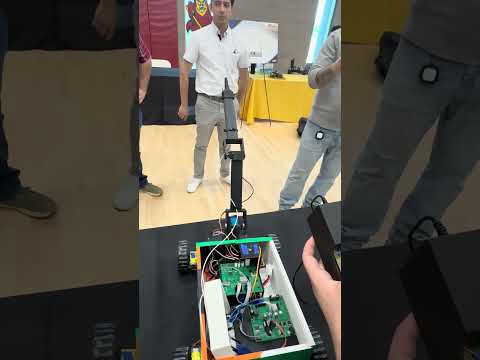
CropSCOUT MVP demo video
CropSCOUT MVP demo — real prototype, tested & validated, presented at the ASU Innovation Showcase · Watch on YouTube →
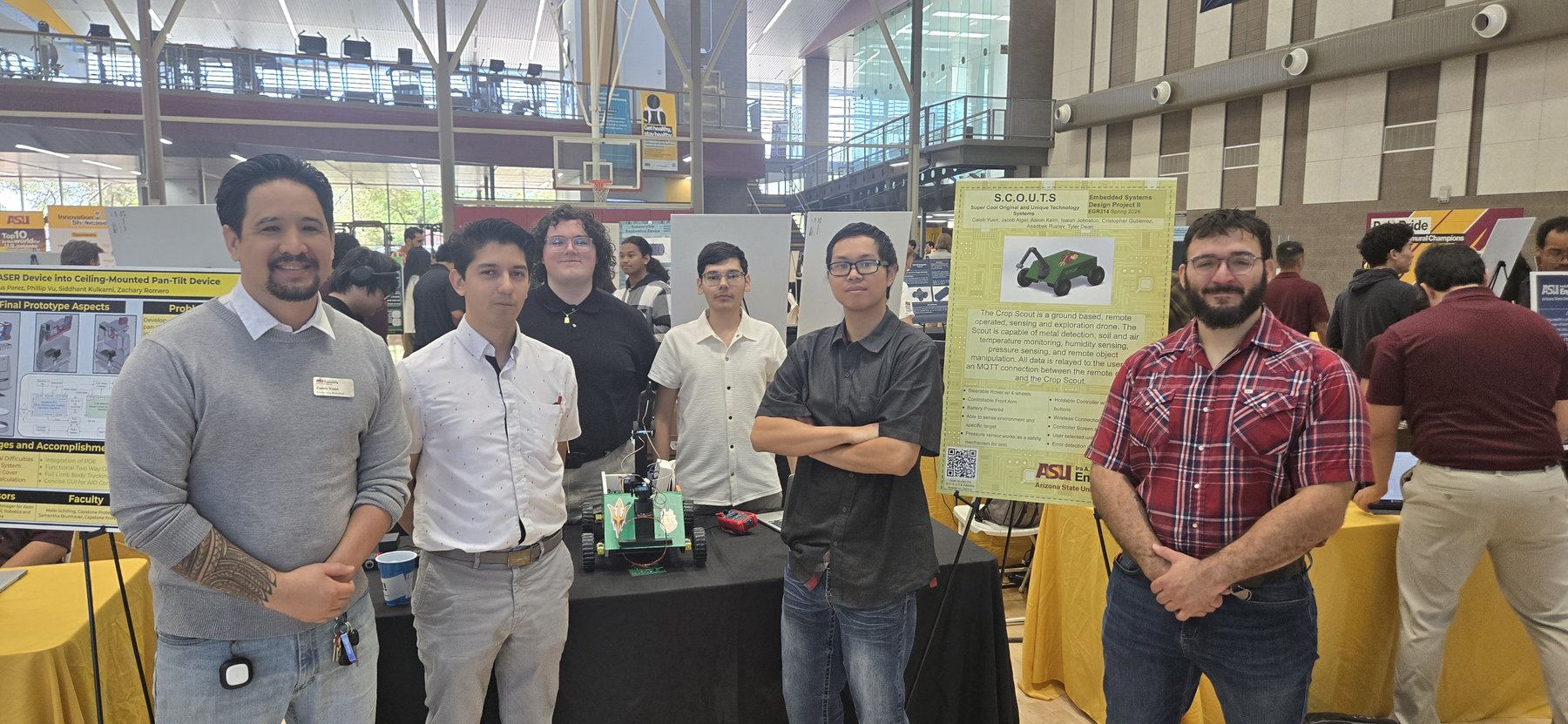
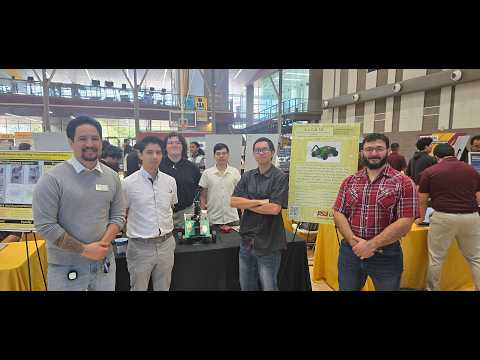
CropSCOUT rover team at the ASU Fulton Innovation Showcase
Innovation Showcase — the rover on the table, poster behind it
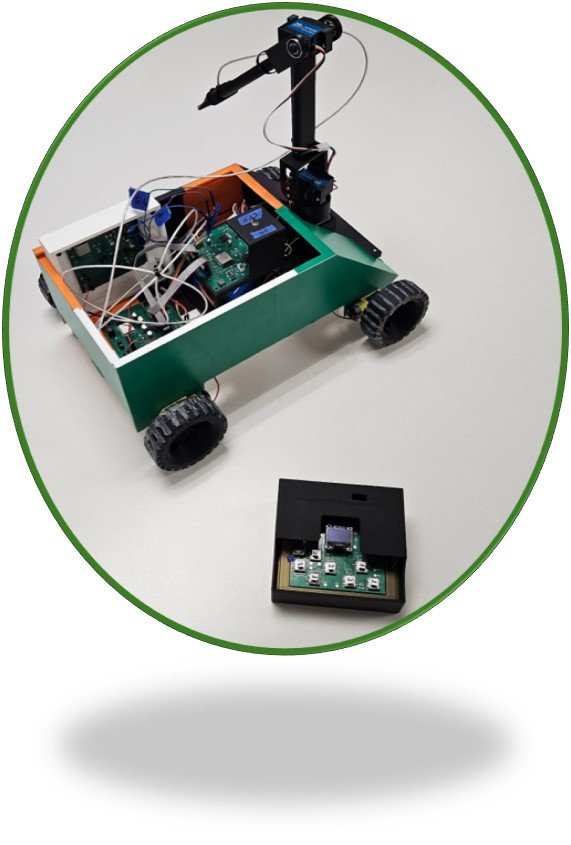
CropSCOUT MVP rover with front arm and wireless controller
The MVP rover and its wireless controller
02 — Electronics

Our own PCB stack

Every PCB in the MVP was designed and assembled by us — schematic, layout, fabrication, bring-up and debugging.

The board pictured is the motor-driver node: an ESP32-S3 driving 4× TLE9201SG H-bridges over SPI, one of the 7 PCBs in the rover's distributed architecture. Asadbek led the wheel-motor subsystem.

Next revision: the main controller moves to a Teensy 4.1 — more headroom, CAN bus, real-time control — and after that a Jetson Nano joins the stack for onboard vision and autonomy.

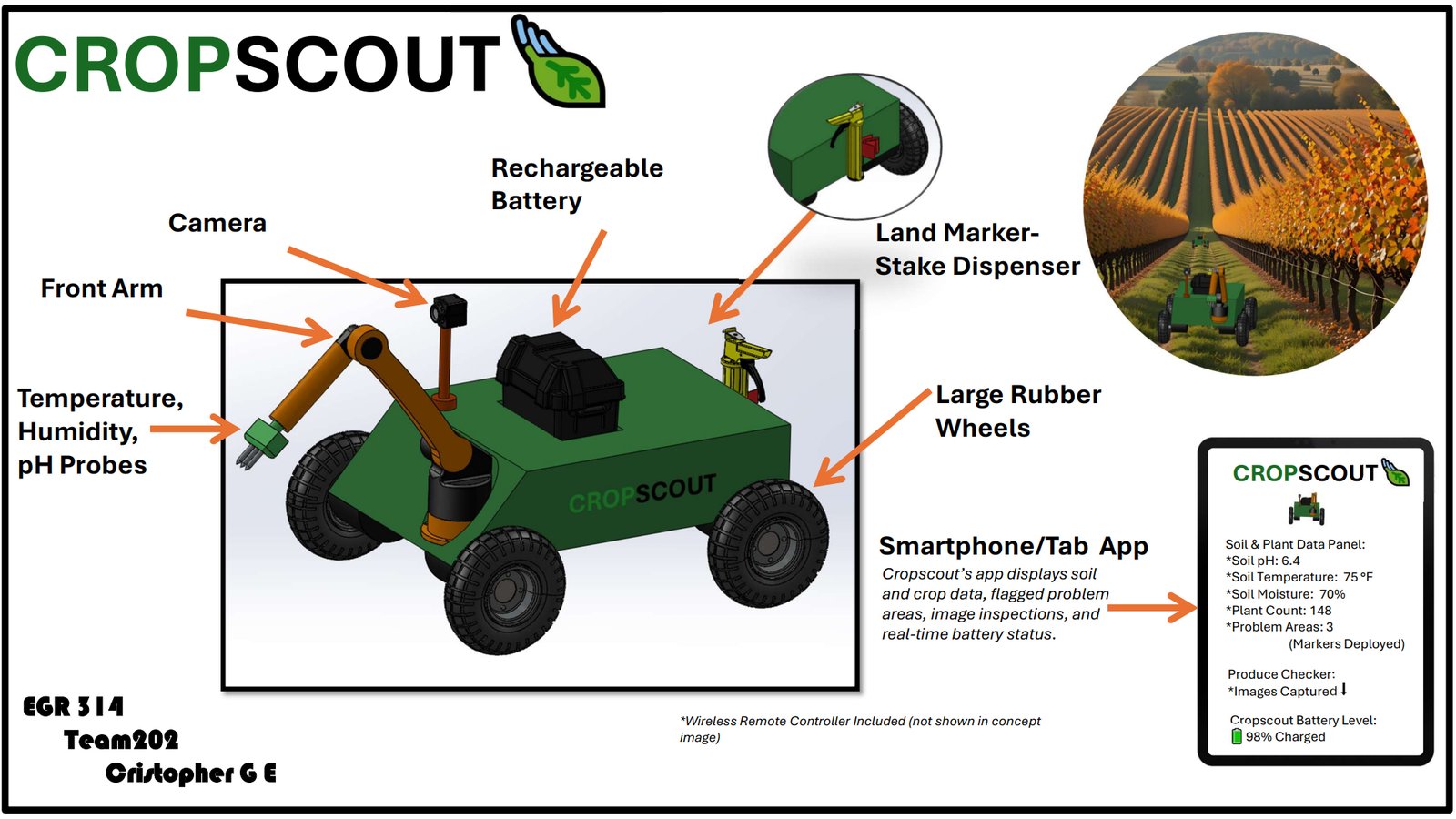
CropSCOUT concept design — front arm, camera, probes, battery, marker dispenser, app
Concept design — arm, camera, probes, battery, stake dispenser, farmer app

The concept design defined what the field robot has to do before a single part was ordered: front arm with temperature / humidity / pH probes, camera mast, swappable battery, land-marker stake dispenser, and a smartphone app showing soil & crop data in real time.

Full concept design process →

03 — Drivetrain

Motor control, up close

The current drivetrain runs over UART — the controller streams drive commands to the motor nodes, and the rover reports back. This short shows it running on the bench.

The next revision scales this up: more motors — per-wheel drive plus actuated attachments — moving to CAN bus so every motor node sits on one robust field-grade network.

CropSCOUT motor drive demo over UART
Bench demo — drive over UART · Watch on YouTube →
04 — Platform research

Standing on studied ground

Before designing our own field chassis, we studied how the best small ground platforms are built — drivetrain and suspension, CAN protocols, payload interfaces — and now know them inside out:

05 — Roadmap

Build, then pilot

July — August 30, 2026

CAD model

Full SolidWorks assembly of the field-scale CropSCOUT: chassis, drivetrain, and every attachment interface — modeled, reviewed, and frozen for fabrication.

September 2026

Everything ready

The machine is complete and running by the end of the month. 3D-printed parts, aluminium and steel machining, fabrication and welding; motors and the Teensy 4.1 stack; the precision-spraying module and the full crop-monitoring sensor suite — camera, soil and climate sensors. Software lands with it: ROS integrated, LiDAR in for perception and navigation, and the autonomy stack working end-to-end.

From October 2026

Pilot

Nothing left to build — from here we put it on real plots and run it. The first number we owe our farmers is the one they asked us for directly: how many sotix an hour it can actually cover. Every pass after that is measurement, failure, and iteration on ground we do not control.

The next module on the roadmap, once the sprayer is proven in the field: automated weeding on the same base — the job our respondents named as their single largest time cost.